01
Rescue work came first
Growing up in Buffalo, Sara's early rescue work, shelter volunteering, and hands-on animal care shaped her understanding of responsibility, welfare, and trust.
About Sara
Before veterinary school, there was shelter volunteering, rescue work, and direct responsibility for animals. Those experiences still inform how Sara thinks about welfare, trust, and the human decisions surrounding clinical care.

Path to practice
Sara's professional perspective developed through a sequence of different responsibilities rather than a single specialty or setting.
01
Growing up in Buffalo, Sara's early rescue work, shelter volunteering, and hands-on animal care shaped her understanding of responsibility, welfare, and trust.
02
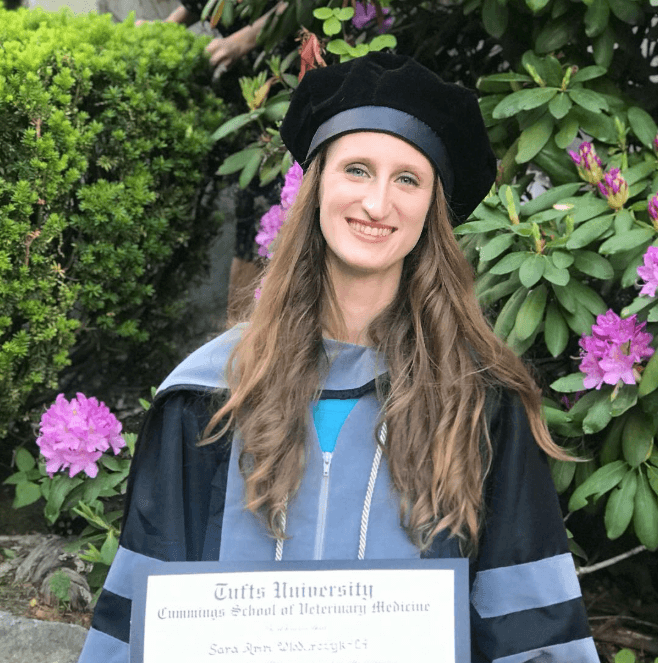
After undergraduate study at Bowling Green State University, she earned her veterinary degree from Tufts University Cummings School of Veterinary Medicine.
03
Work across urgent care, general practice, shelter medicine, and research developed a perspective that considers immediate need, long-term follow-through, and the realities of care at home.
Clinical perspective
Across acute, ongoing, shelter, and research environments, the common task is to make careful decisions with the information and resources available.
Assessing acuity, setting priorities, and helping owners understand what needs attention now and what can safely wait.
Prevention, chronic disease management, continuity of care, and plans that owners can realistically carry forward at home.
Animal welfare, population-level thinking, and responsible decision-making when time and resources are constrained.
Close reading, evidence appraisal, and a disciplined approach to clinical questions that do not have simple answers.
Communication
Difficult cases ask families to weigh prognosis, uncertainty, cost, home care, and quality of life. Clear communication is part of helping them do that responsibly.
Owners deserve to understand what is known, what remains uncertain, and how each option may affect their animal and family.
Cost, home care, quality of life, and a family's capacity all shape whether a medical plan can succeed.
Whether a case is urgent, routine, or resource-limited, the patient's welfare remains the central measure.
Continue the conversation